In This Issue:
The Power of Examples | But Is It Legal? | The Missing Component
The two most powerful words in any presentation are “for example.” Yet investment managers use specific examples infrequently or without skill. This issue of Excess Returns considers why investment company professionals so often get this wrong and what can be done about it.
With best wishes,

Liz Hecht
Founder and Principal
Print a PDF of this newsletter
The Power of Examples
When I began working on Wall Street, I spent a lot of time during interviews with portfolio managers and securities analysts thinking, “I wonder what they really mean?” The lexicon of the financial world was new to me and I thought that was the problem. Yet here it is many years later, after I have built a career in this business, and I still frequently wonder what investment professionals really mean.
Over the course of my career, I have listened to hundreds of presentations by different investment companies and, with stellar exceptions, these presentations often are completely devoid of supporting examples and explanatory detail. During new business presentations, simulating a finals for a multimillion dollar mandate, I sometimes feel like the dog in the famous Far Side cartoon: all I hear is “Blah blah blah Liz blah blah blah Liz blah blah.”
Beyond Blah Blah Blah
The blah blah factor stems from the fact that most investment managers are selling exactly the same thing (enhanced returns with reduced risk) using exactly the same language (fundamental research blah blah secular trends blah blah tail risk blah). So they all sound alike. To cut through all this sameness, I have learned over the years to ask a simple question: Can you please give me an example?
When I ask this question, one of two things happens: (1) investment firm professionals answer the question enthusiastically and I start to understand what they mean or (2) they skirt or botch the question, and I realize that they don’t really know what they’re talking about or don’t really do what they say. Put another way, this question causes professionals in our world either to rise to the occasion or fall apart.
In the July 2011 issue of this newsletter, I wrote about what we at Alpha Partners call “elephant questions,” or questions that are so big and important that they should be answered before they are asked. In my view, requests for examples are elephant questions. Investment marketers should provide specific examples before they have to be asked. Yet there are many reasons why this still does not happen:
Living in a bubble world. Few investment professionals operate outside of their own rarefied environment. They actually think that most people understand terms such as “secular trends” and “tail risk.” Compounding the problem, those out there in the real world who do not know what these terms mean are unlikely to admit it. Like the dog in the Far Side cartoon, they listen attentively without understanding.
Portfolio manager inaccessibility. The portfolio manager or portfolio specialist does not routinely make fresh, relevant examples available to marketing and client service professionals. At many firms (still, in 2013!), much lip service is given to the importance of transparency but a true culture of transparency has yet to take hold.
Fear of being pinned down. Portfolio managers live in a changing world where what makes sense one day might very well seem foolish the next. Some managers react to the vicissitudes of the investment markets by refusing to be pinned down on the specifics regarding anything at all. They are much more comfortable being vague and so a nebulous quality begins to infect all aspects of their communications. (I find it incredible, for example, that some portfolio managers still say that they plan to meet their performance objectives over “a full market cycle”. Whatever, the average layperson must wonder, might that mean?)
Fear of oversimplification. Sometimes investment professionals are concerned that specific examples will oversimplify their investment process. This is true in particular of firms with quantitative investment strategies. This concern may be well-founded. An even more legitimate concern, however, is that a simplified example may be the only way to make a quantitative strategy understandable and prospective clients are unlikely to buy something that they do not understand.
A low bar for salespeople. Often, when I suggest to clients that specific examples would help build understanding of the investment strategy, they say, in effect, “Liz, we are concerned that our salespeople might give the wrong examples or might give examples that create misperceptions about our investment process.” This is a legitimate concern at some companies where the salespeople, for any number of reasons, really don’t fully understand what they are selling. Such reasons range from portfolio manager inaccessibility (noted earlier in this article), firm cultures that have not yet embraced transparency and the mistaken belief that salespeople are intellectual lightweights unable to discuss the investment strategy in any depth.
The risk of faulty execution. There are indeed many pitfalls in presenting examples effectively. The wrong examples (a holding notoriously unfriendly to unions presented to a Taft-Hartley plan) can be worse than no examples at all. An example or examples presented with excessive detail can kill a presentation. Examples that contradict the investment process also are a common problem. (Such examples may prompt the question “That’s a nice story you just told me. But what does it have to do with the investment process you described earlier?”)
When Long-Term Capital Management (LTCM) began marketing to investors, writes Roger Lowenstein in his fascinating book When Genius Failed, “Long-Term even refused to give examples of trades, so potential investors had little idea of what the partners were proposing.” By not providing effective examples, investment firms rob prospective clients of that critical moment of understanding where they can say, “Aha! I see! Now I know what you mean!” After the fall of LTCM and Bernard Madoff, investors may be more likely to demand specific examples before writing a check.
But Is It Legal?
Past legal rulings on the use of examples have emphasized that written examples are allowed under the law as long as they describe how the investment process is implemented—not the results of process implementation with respect to a specific security. The ability to use written examples is subject to approval by your company’s compliance department and some departments are more strict than others.
The Missing Component
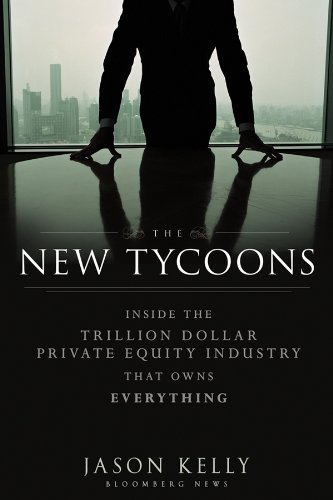
An important assignment recently sent me to the private equity section at Amazon where I found The New Tycoons: Inside the Trillion Dollar Private Equity Industry That Owns Everything. As I write this I am halfway through the book and enjoying it immensely. As the infographic on Amazon points out, this book dramatizes how pervasive private equity has become, playing an investment role in many of the products that populate our daily lives. It is this precise component that I find to be missing from many investment marketing efforts: an understanding of the underlying investments in the form of real companies, products and personalities. Investors, it seems to me, want to know that they are investing in something more tangible than a list of top 10 holdings or a pie chart showing sector allocations. They want to know what the companies in the portfolio make or do and how they fill a void or realize a dream.