
In This Issue:
The Power of the Pause | Tough Questions | Q&A Prep
Even the most skilled presenters can lose the plot during Q&A. By rambling without answering the question. By erupting into a sudden blizzard of “ums” and “uhs” that betray lack of conviction. Or by failing to substantiate general statements with specific examples. This issue of Excess Returns considers what can go right—and wrong—during this critically important part of any presentation.
With best wishes,

Liz Hecht
Founder and Principal
The Power of the Pause
“That’s a great question.”
“You’re asking the wrong question.”
“Well, uh, …”
And there you have it: Three ways people often start their answers to questions during investment company meetings. By complimenting the person asking the question: Your question is great. By insulting the person asking the question: Your question is wrong. Or by being indecisive: Well, uh …
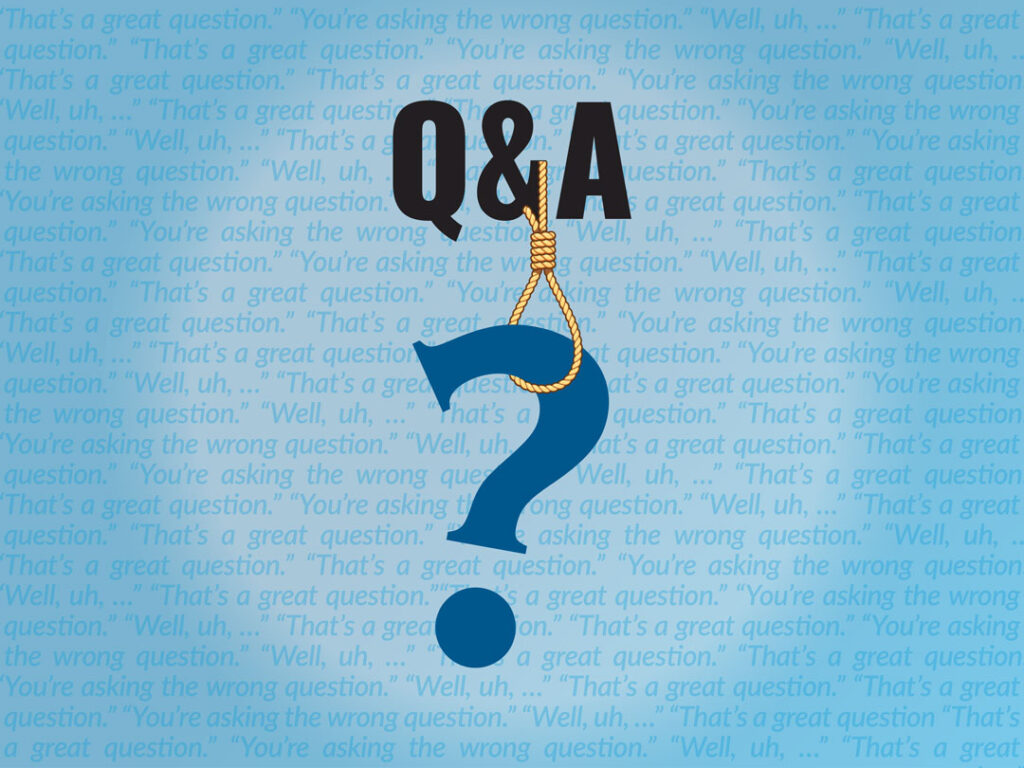
Many an ill-prepared presenter dies a slow death during Q&A.
During new business and client meetings, “That’s a great question” has become almost as ubiquitous as “Thank you for having me” at the start of virtually every television interview. A client recently asked me, “Several members of my team often say, ‘That’s a great question’ before answering. What do you think about this?” Here’s what I think:
I think that everyone says “That’s a great question” all the time. (While writing this, I asked my favorite bot about the correct placement of a hyphen. The bot’s response started with “That’s a great question, Liz.”)
The question might indeed be blazingly insightful. But more often it is an ordinary, expected question. So calling it “great” seems insincere.
“That’s a great question” frequently precedes a rambling, indecisive answer. Some even perceive it as a sign of deception.1
And finally, presenters say “great question” so many times during Q&A that it has become a form of predictable clutter akin to filler such as “kind of” and “you know” and non-words such as “um” and “uh.”
There is a better way: the simple power of a thoughtful pause. A pause confers a valuable moment or two to structure your response. A pause is the absence of noise. In marked contrast to clutter such as “That’s a great question” and the like, a brief pause very often precedes a thoughtful, articulate response.
Try it the next time you present. Pausing before answering a question is hard to do; there is a strong natural tendency to say something before responding. To get good at pausing, watch people being interviewed on television. You will see that very few resist the urge to provide a preamble of some sort when answering every question. And you will see how powerful it can be to simply answer the question.
Tough Questions
A bumbling response to tough questions like these can derail even the best planned meetings:
- Why have you underperformed lately and what are you going to do about it?
- Why did you own this underperforming investment for such a long time?
- Your lead portfolio manager who built your track record just left your firm. How will your team weather this loss of talent?
- How is your investment team harnessing the power of AI?
- Describe a mistake that negatively affected performance. What did your investment team learn from this experience and how have you strengthened your investment process as a result?
Presenters can get ahead of many such questions by answering them before they have to be asked. Acknowledge the elephants in the corner of the room before they trample all over your carefully planned presentation. For more on this, see Feeding the Elephant.
Q&A Prep
Presenters often spend significant time preparing to present without sufficient focus on Q&A prep. You should seek to anticipate all manner of questions: tough questions, off-the-wall questions and questions where the only real answer is “Hell if I know!”
Script answers to key questions and ensure your responses align clearly with the firm’s current presentation and RFP narrative. To avoid unnecessary repetition, coordinate with any co-presenter(s) to decide who will cover certain types of questions. As you prepare, consider specific examples that will clarify your answers. And of course, don’t forget to practice the power of the pause!
- In Spy the Lie, former CIA officers describe “That’s a good question” as one of several “non-answer statements” aimed at “buying time and figuring out how to respond.”↩︎